Types of Clean Vehicles
Clean vehicles come in all shapes and sizes, including sedans, SUVs, hatchbacks and pickup trucks, to match every lifestyle.
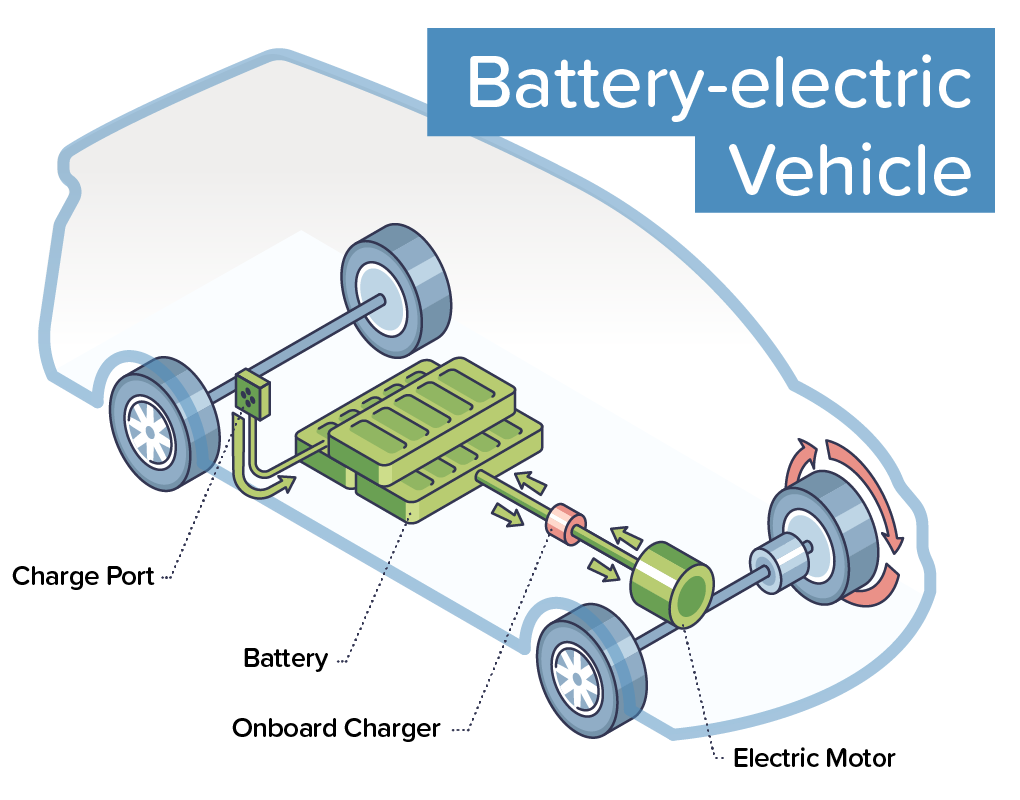
Battery-Electric Vehicles
Battery-electric vehicles (EVs) are fully electric with no gas engine. EVs typically travel 150–350+ miles on a full charge. Most drivers can charge at home but if not, most EVs support DC fast charging and/or Supercharging, which can add more than 100 miles of range in 30 minutes or less.
- Onboard Charger – Converts incoming AC electricity to DC power for charging the battery. A higher-power onboard charger lets you charge more quickly on Level 1 or Level 2 charging.
- Charge Port – Enables the car to be plugged in to charge.
- Electric Motor – Propels the car.
- Battery – Mounted under the seats for better balance and more interior space. Stores energy to power the motor and can be as large as 100 kWh.
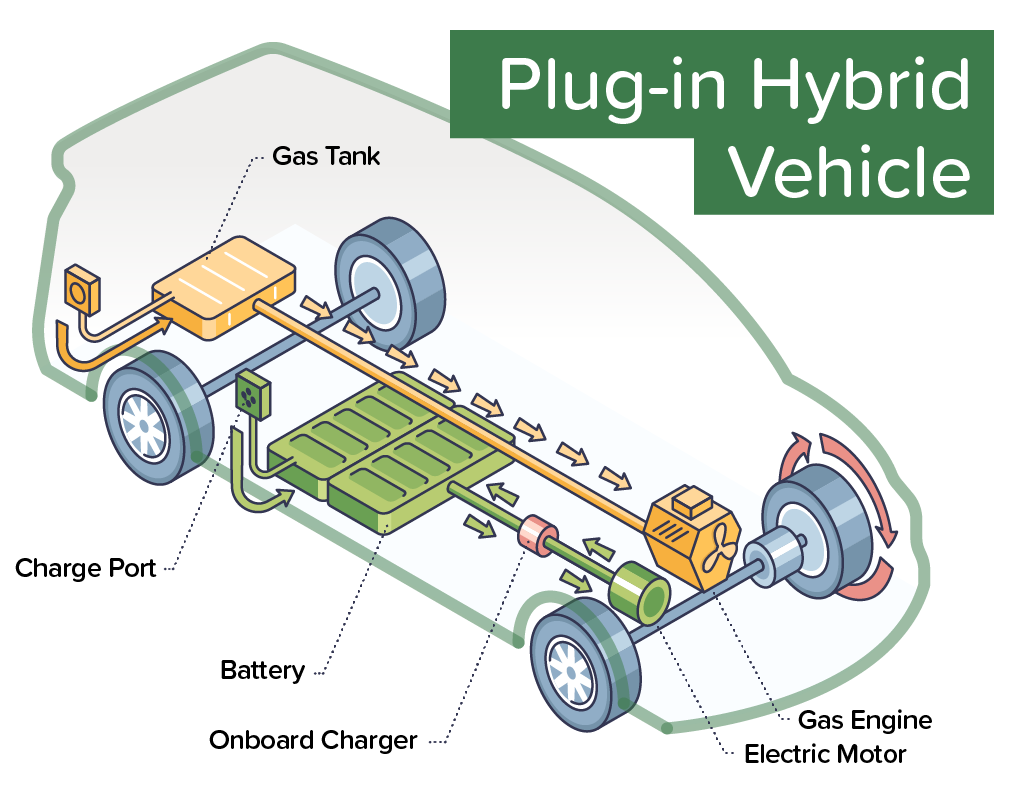
Plug-in Hybrid Electric Vehicle
These vehicles have both an electric motor and a gas engine. Most plug-in hybrids can go 20–80 miles on electric power alone and then switch to gas for a combined range of 600+ miles. Since most Californians drive less than 30 miles per day, many plug-in hybrid drivers do their daily commute entirely on electricity. With workplace or public charging, they can extend electric-only trips.
- Gas Engine – Assists electric motor when driving at high speeds and powers the vehicle when the battery is depleted.
- Electric Motor – Powered from the battery, the electric motor propels the vehicle to higher speeds.
- Gas Tank – Smaller than conventional gas tank.
- Onboard Charger – Converts incoming AC electricity to DC power to charge the battery.
- Charge Port – Enables the vehicle to be plugged in to an external power source.
- Battery – Stores between 8-16 kWh for short-range electric driving.
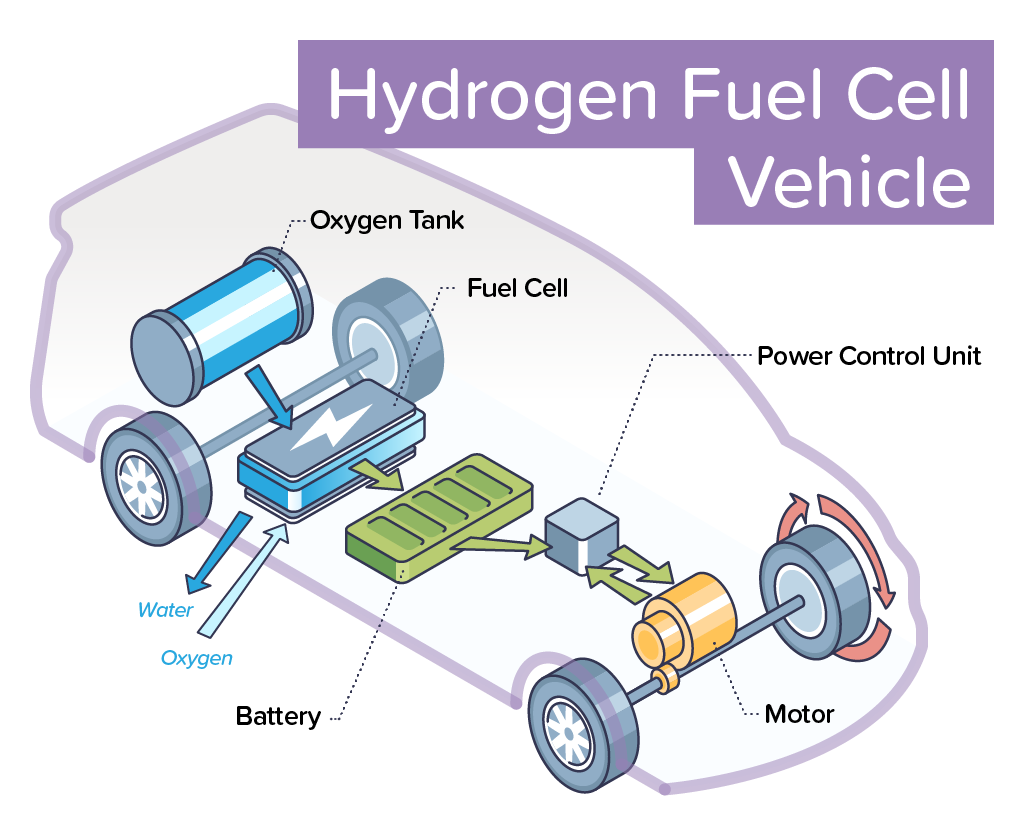
Hydrogen Fuel Cell Electric Vehicle
Hydrogen fuel cell electric vehicles run on compressed hydrogen gas. They generate electricity onboard through a chemical reaction between hydrogen and oxygen in the fuel cell—no plugging in required.
You get the same benefits as other electric vehicles: smooth acceleration, quiet rides and zero tailpipe emissions. The only thing that comes out of the tailpipe is water vapor.
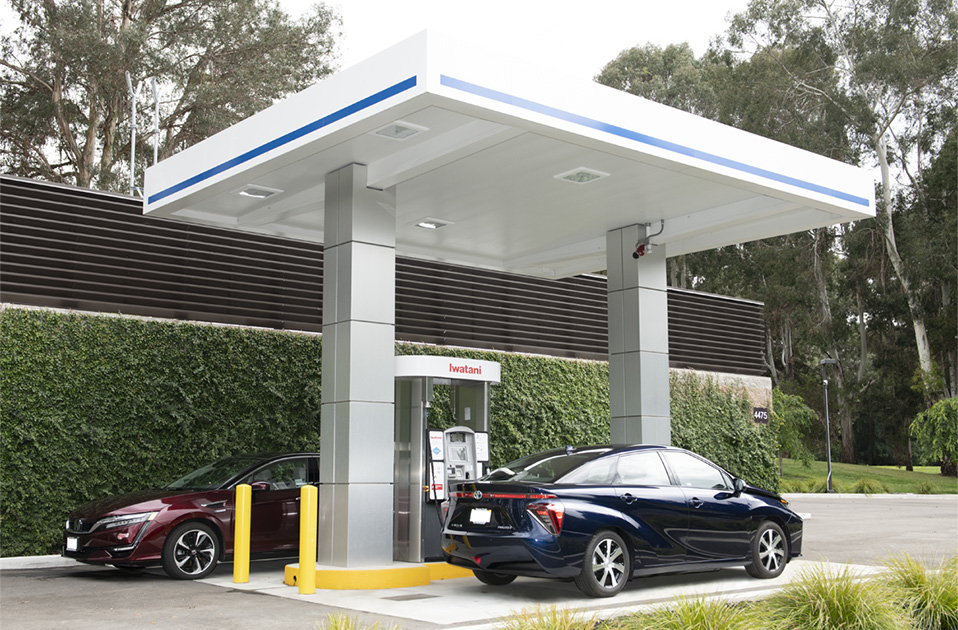
Hydrogen vehicles can travel 300-400 miles on a full tank and refuel in just 3-5 minutes—about the same time it takes to fill a gas tank. This makes them ideal for drivers who want the benefits of electric driving with the speed and convenience of traditional fueling.
More than 50 hydrogen stations are open in California with more in development.
Learn more about where you can fuel here h2fcp.org/stationmap.
How Clean Vehicles are Different
Driving a clean vehicle feels different—in the best way.
Driving Experience
With an electric or hydrogen vehicle, there’s no engine noise, no gear shifting and no lag when you press the pedal. These vehicles offer instant torque and quick acceleration. Driving a plug-in hybrid is like driving an electric or hydrogen vehicle when powered by the electric motor, but feels and operates more like a conventional vehicle when powered by gasoline.
Charging and Fueling
You can charge your electric vehicle at home overnight, at work or at public charging stations when you’re on the go. A plug-in hybrid needs gas and can be plugged in to charge, too. Hydrogen vehicles can only be fueled at hydrogen stations.
Maintenance
Because battery EVs have far fewer moving parts, maintenance is easier and cheaper—no oil changes, smog checks or service for spark plugs, transmission, mufflers, fuel injectors, timing belts and catalytic converters. Hydrogen vehicle maintenance is nearly identical and doesn’t require ongoing care apart from periodic inspections. Plug-in hybrids have internal combustion engines and regular maintenance like any gas-powered car.
Tips for Car Shoppers
Ready to explore your options? These quick tips will help you get started:
Search for Vehicles by Your Needs
Use filters to find models that match your budget, lifestyle and driving habits. Visit Search Vehicles to start browsing.
Check for Incentives
You may qualify for rebates on vehicles and chargers. Try the Incentive Navigator to find savings.
Use Apps to Find Chargers and Fueling Stations
Tools offered by PlugShare and ChargePoint make it easy to find nearby charging stations. Apps like Alternative Fueling Station Locator and Hydrogen Stations USA can help you find hydrogen stations. Learn more about Charging and Fueling.
Visit the Resources Page
Find guides, cost calculators, charging locators and incentives all in one place. Explore Resources.
“Owning an EV has dramatically changed my income”
As a delivery driver, it has reduced my fuel costs to the point where my income stream is much steadier.
Christopher A.
Battery-electric vehicle owner
“Can't ask for more.
It's a 10 out of 10!!!”
The low-speed torque gives you great stop and go power like a V8. No engine vibration and no exhaust smell.
Jerry
Fuel cell electric vehicle owner
Why Choose a Clean Vehicle?
Curious how clean vehicles compare to gas cars when it comes to performance, cost and environmental impact? See what sets them apart.